Local Area Network
A local-area network (LAN) is a computer network that spans a relatively small area. Most often, a LAN is confined to a single room, building or group of buildings, however, one LAN can be connected to other LANs over any distance via telephone lines and radio waves.
Cabling:- Early Ethernet (10BASE-5 and 10BASE-2) used coaxial cable. Shielded twisted pair was used in IBM's Token Ring LAN implementation. In 1984, StarLAN showed the potential of simple unshielded twisted pair by using Cat3 cable—the same cable
used for telephone systems. This led to the development of 10BASE-T (and its successors) and structured cabling which is still the basis of most commercial LANs today.
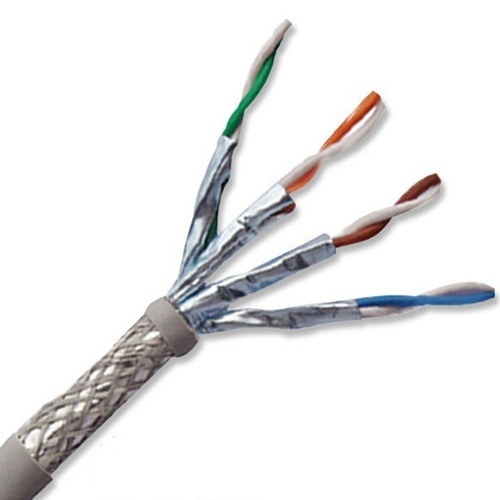
Shielded pair twisted cable
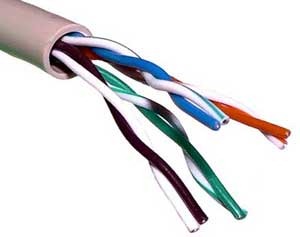
Unshielded pair twisted cable
While optical fiber cable is common for links between network switches, use of fiber to the desktop is rare.
LANs are capable of transmitting data at very fast rates, much faster than data can be transmitted over a telephone line; but the distances are limited and there is also a limit on the number of computers that can be attached to a single LAN.